1. Hydrogen production
- for energy applications
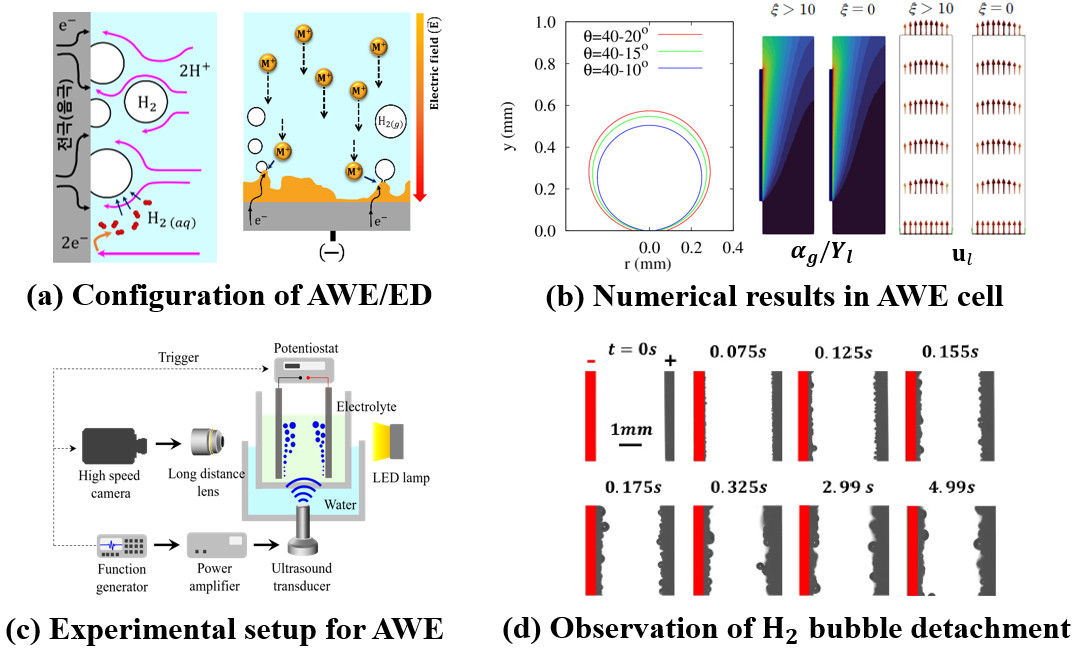
Hydrogen energy can be utilized as a high-density and sustainable energy carrier in combination with renewable energy. To efficiently produce hydrogen gas, it is important to control bubble generation and behavior during water electrolysis process.
In our lab., hydrogen bubble behavior during alkaline water electrolysis(AWE) and electrode deposition(ED) are studied using 1D/2D simulations and experiments.
2. Utility facility CFD
- for industriall applications
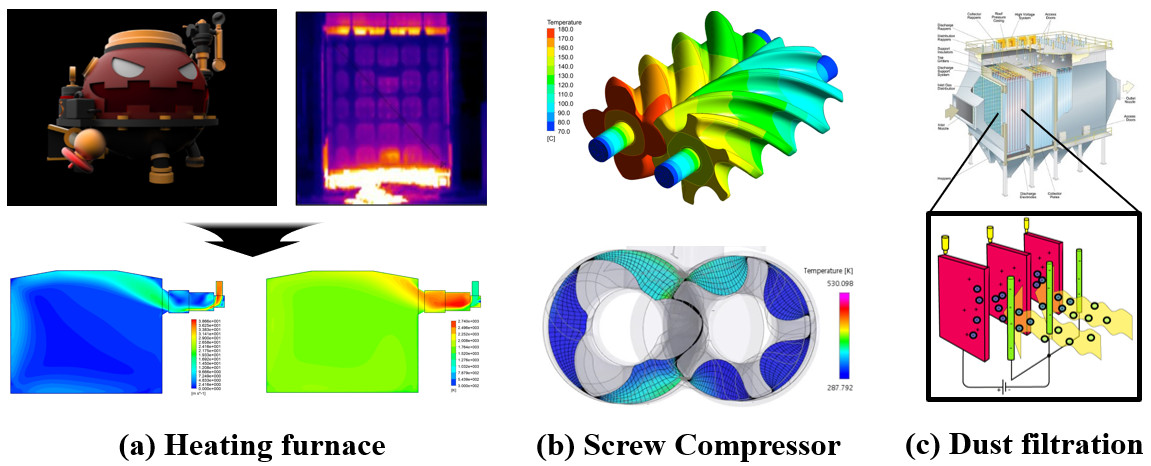
To ensure the industrial competitiveness, especially for root companies in energy-intensive industries, which face challenges for responding to the change in the global supply chain. CFD simulation is essential for predicting the performance of various components within a process and providing clean, noise-free data for digital twin learning and optimization.
In our lab., simulation of utility facilities is conducted using SIMERICS/FLUENT
3. Fluid-structure interaction (FSI)
- for medical/marine applications
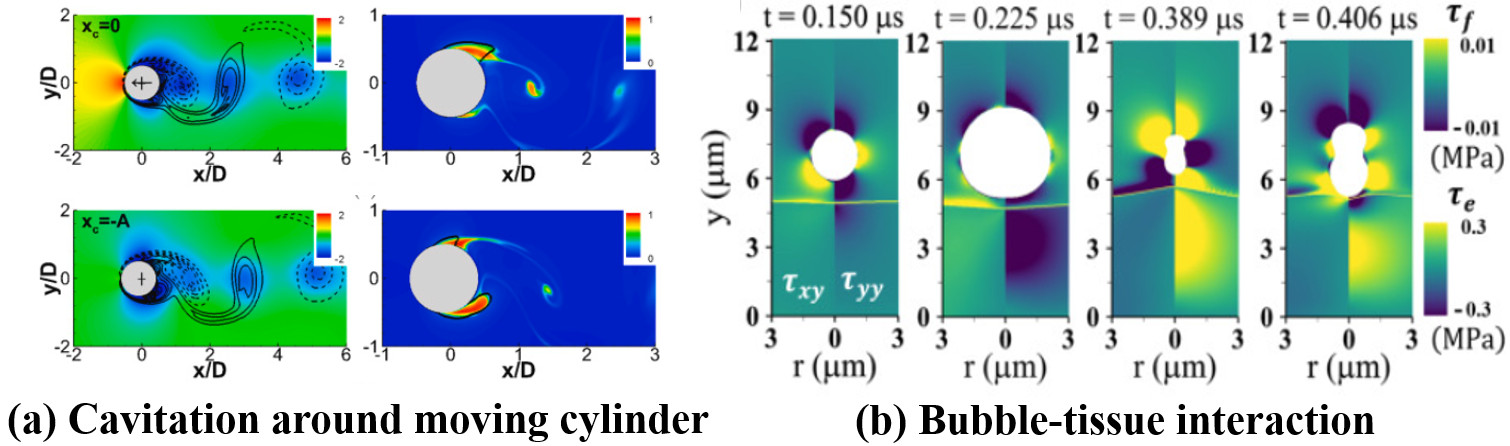
Multiphase flows in various engineering applications, from red blood cells/vessels to ship/cable, typically involve fluid-structure interaction (FSI) situations. Analyzing two-way coupled FSI scenarios is crucial to design and optimize applications such as cavitation erosion, algal disruption, medical diagnostics/therapy.
- In our lab., FSI situations are investigated using a numerical simulation.
4. Thermal management
- for industrial applications
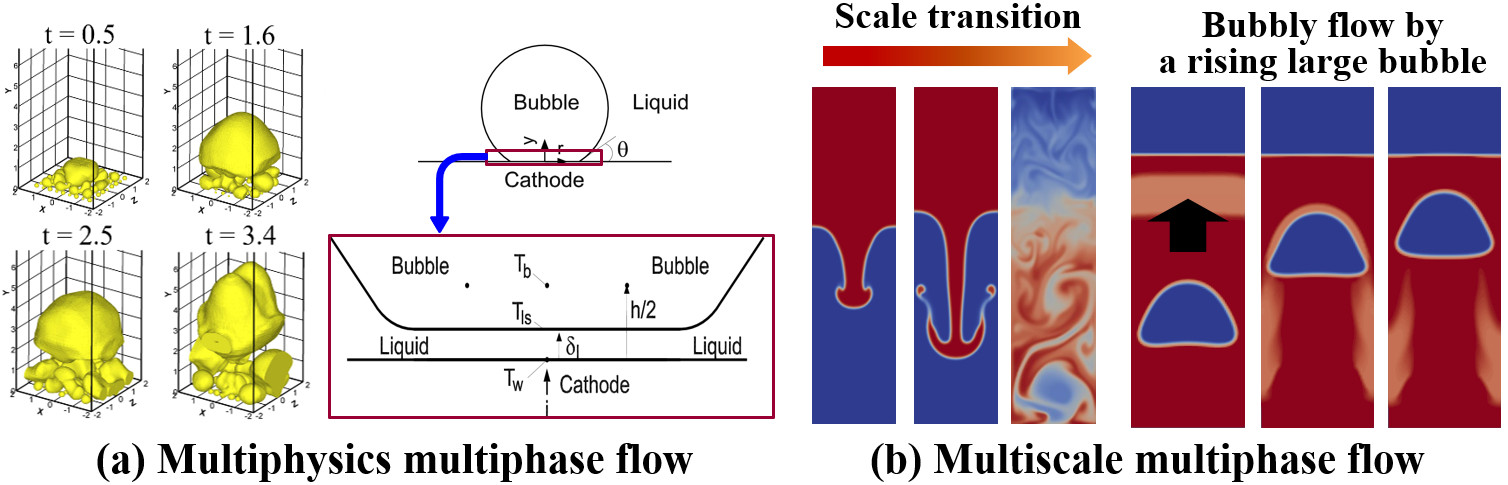
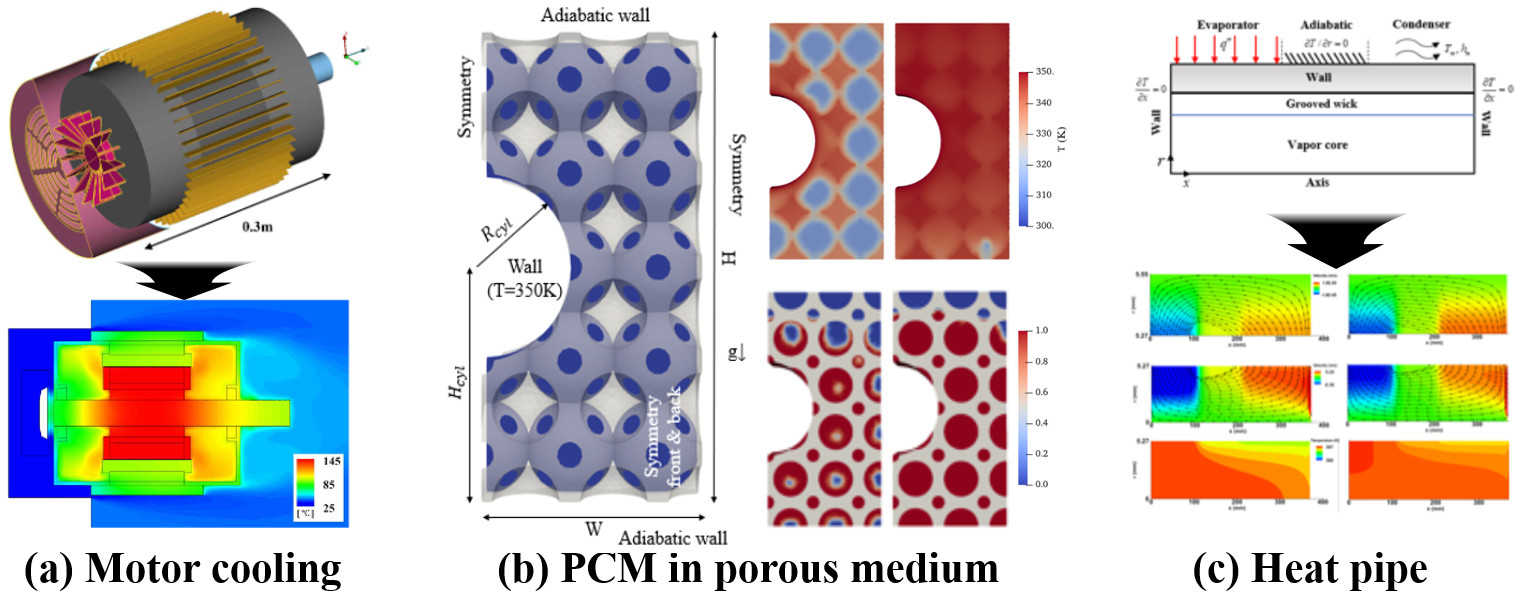
High-efficiency heat dissipation structure and use of heat dissipation materials are used in various fields such as semiconductors and industrial motors. Understanding conjugate heat transfer including phase change/porous structure/electromagnetic field is important for the design of energy-efficient systems.
In our lab., CFD simulation is conducted using ANSYS FLUENT/CFX or OpenFoam
5. Acoustic cavitation
- for environmental applications
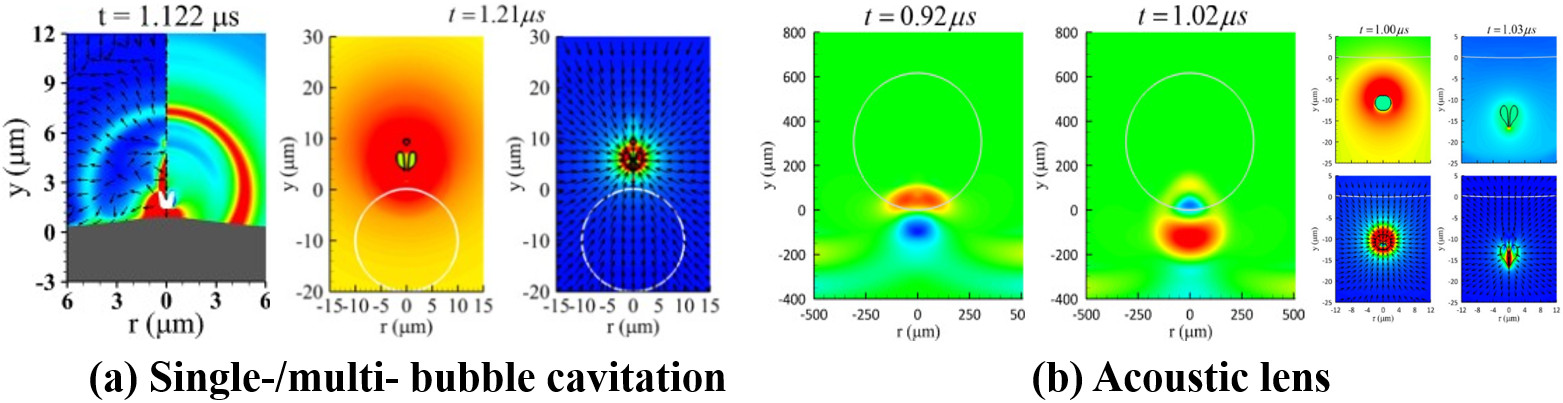
Acoustic cavitation is a phase-change phenomenon induced by a pressure drop in a liquid. When the acoustic cavitation bubble collapses, strong shock-wave and liquid jet are produced, and available to damage a target tissue/algae for medical and environmental applications, such as surface cleaning and algae removal.
In our lab., acoustic cavitation phenomena are being studied using a numerical simulation.
6. Energy simulator
- for energy applications
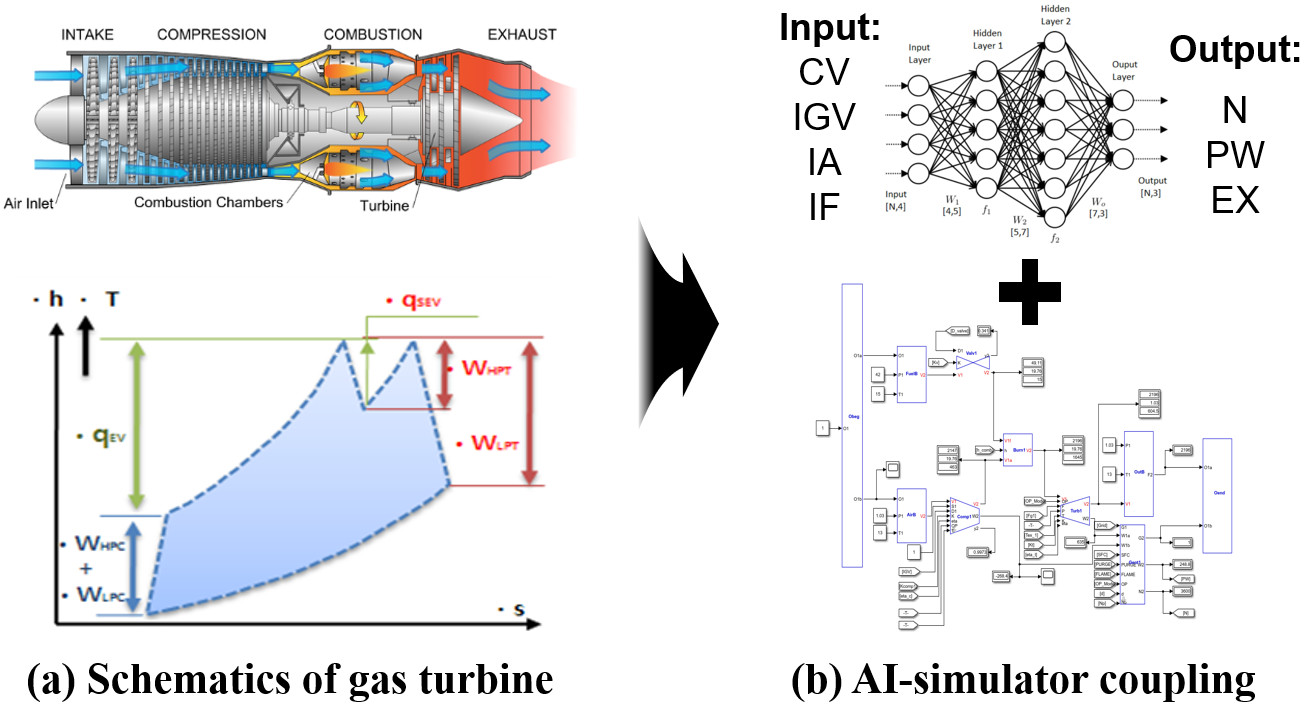
Gas turbine simulation has recently been emphasized due to energy efficiency. Using artificial intelligence trained with data, it can be used in field test situations where gas turbines cannot actually be operated.
In our lab., system simulation is conducted using MATLAB Simulink and the C language.
7. Numerical method for multi-phase flow
- for multi-phase heat/mass transfer
Numerical simulation including boiling, condensation and electrochemical reactions using interface tracking method is crucial for process design and optimization across various engineering fields
In our lab., level-set method and phase change modeling are being developed using in-house code/OpenFoam.